How to sleep with tinnitus: a bedtime routine, step by step
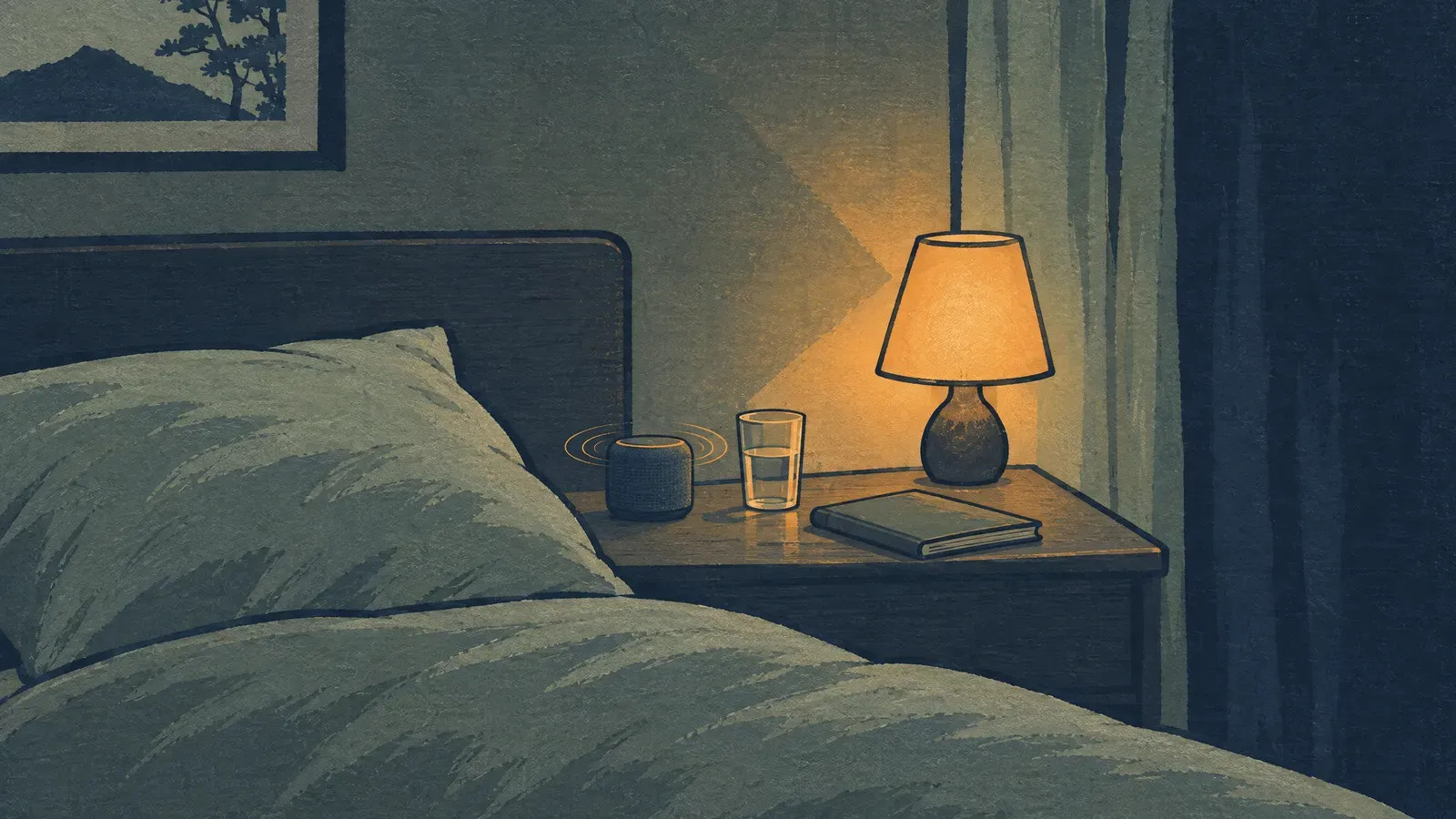
People who sleep with tinnitus mostly work around one thing: a silent bedroom leaves the ringing with nothing to sit against, so they put something plain in the room and let it run. It’s a comfort, not a cure, and no one can promise you an easier night. What follows is the whole routine in the order you’d run it tonight, from setting the room up to knowing what you’ll do if you wake at three. The browser player at slonoise.com is free with no account, so trying it costs you nothing. One thing before any of it: ringing that’s sudden, in one ear only, pulsing in time with your heartbeat, or paired with a drop in hearing needs a doctor before any bedtime routine.
When to see a doctor first
You know your own ringing better than any page does, and most of the time it’s the ordinary kind that comes and goes. The patterns above are the exceptions worth an appointment. The US National Institute on Deafness and Other Communication Disorders suggests starting with your regular doctor, who can look for something as plain as earwax or an infection sitting in the ear canal before anyone talks about sound at all.
Slo plays audio. It’s no kind of medical device, and nothing in this routine changes what’s causing the ringing.
Step 1: get the room ready before you’re in it
Do the fiddly parts standing up, while you still have patience for them. Put whatever you’re playing sound on across the room instead of beside your head: a small speaker on a shelf, a laptop on a desk, anything with a bit of distance. The setup to avoid is a phone under the pillow, which holds sound against your ear for hours and quietly tempts you to raise the volume.
Check that your alarm still cuts through whatever you’re playing. Open the player before you get into bed and set the timer then, so the last move of the evening is pressing play and lying down, not hunting for a slider in the dark.
Step 2: pick one sound and stay with it for a week
Choose a single steady recording and stop shopping. Rain, brown noise and a fan are where most people start, because each one holds a fairly even character and carries no speech for your brain to chase. Swapping tracks every night turns the sound itself into the thing you lie there listening to.
Play these three at the level you’d really use, a few seconds each.
Brown noise is a deep rumble, the sound of a plane cabin or heavy wind outside. White noise is a bright hiss, nearer in pitch to the high ringing most people describe, so it tends to sit across that tone more closely; some listeners also find eight hours of hiss wearing. Gentle rain is softer, with small gaps you can hear into. Our white noise and brown noise comparison works through that trade-off. Whichever one you stop noticing soonest is your sound for the week.
Step 3: set the volume while you’re still sitting up
Set it once, early, then leave the slider alone. Start lower than seems useful and bring it up only until the room stops feeling silent around you. Two rough checks: you can talk across the room without lifting your voice, and you’d still hear a phone ringing somewhere else in the house.
Almost everyone tries turning it up until the ringing disappears, and almost nobody keeps doing it. You end up with a louder sound you can’t ignore in place of the first one, and long hours of loud audio carry a hearing risk of their own. Ears that feel tired in the morning mean last night was too loud, so drop it a notch tonight. Sound masking for tinnitus goes further into how people find that level.
Step 4: timer or all night
Make this choice once and keep it, because guessing each evening is what keeps people fiddling with the player at midnight. A timer suits you if the ringing only gets in the way while you’re settling: 30 or 60 minutes covers most people’s wind-down, and both sit in the browser player alongside an all-night setting.
If you tend to surface in the small hours, run it all night instead. Waking into sudden silence at three is the thing the timer people complain about most, and there’s no prize for switching the sound off at midnight. Whichever you choose, keep it for a week before you judge it.
Step 5: lights out, and stop grading it
Once the sound is playing, your job is to stop assessing it. Checking whether the ringing has got quieter turns bedtime into a test you can fail, and that’s a rough way to spend an hour when you’re already worn down. Let your attention rest on the rumble or the rain, the way it would on a fan you’ve had for years. A dull recording has nothing in it to follow, and that’s why you picked it.
If one sound alone starts to annoy you, run two quiet layers in the Slo browser mixer and set each one lower than you’d set a single track. Rain over a low fan hum is the common pairing, and a mix that lands louder than one sound alone has gone wrong somewhere.
When you wake at 3 a.m.
Plenty of people with tinnitus do. The room is at its quietest then and there’s nothing else going on for your ears, which is why the ringing stands out so much at that hour; why tinnitus is more noticeable at night covers the quiet-room effect and what two health authorities say about it.
Keep your plan for that moment short, because half asleep you won’t follow a long one.
- If the sound has stopped, start it again at the level you set earlier, and leave the volume where it is.
- Don’t start reading about tinnitus. Three in the morning is a bad hour for research, and you’ll feel worse than when you picked the phone up.
- If sleep doesn’t come back, let the sound run and rest anyway. A quiet hour lying down is not a wasted one.
What helps over the coming weeks
Give the routine seven nights before you change anything, and change one thing at a time after that. In the morning, note two things only: whether the ringing got in the way while you were settling, and whether you noticed the background sound. Still noticing the sound after a week means it’s the wrong recording or it’s too loud.
Sound is a comfort, and comfort counts for a lot when you’re this tired. No one can call it treatment. Researchers pooled the controlled trials of sound therapy in 2018 and found it no better than a waiting list, a fake device or plain advice, on evidence they graded low quality. Those trials ran on hearing aids and clinical generators, not phone apps, so they neither back nor rule out what you’re doing at home.
The care with better backing behind it is talking therapy. If the ringing has been keeping you awake for months, ask an audiologist about cognitive behavioral therapy for tinnitus, which carries stronger clinical support than sound does, and ask for a hearing test at the same appointment. Sleep itself also answers to daylight, caffeine and worry, and none of those come out of a speaker.
Stop the whole experiment on any night it makes your ears feel tired, or when lying down starts to feel like homework. You can come back to it later.
Questions people ask
What sound should I sleep with if I have tinnitus?
Pick one steady recording and stay with it for a week. Rain, brown noise and a fan are the usual starting points, because they hold an even character and have no speech in them. White noise is a bright hiss that sits closer in pitch to a high ringing tone; brown noise is a deep rumble that many people find easier to leave on all night.
How loud should the sound be?
Quiet. Bring it up only until the room stops feeling silent around you, and stop there. You should be able to talk across the room without lifting your voice. Turning it up until the ringing vanishes swaps one sound you can’t ignore for a louder one, and hours of loud audio is a hearing risk in its own right.
Should the sound run all night or stop on a timer?
A timer suits you if the ringing only bothers you while you’re settling; 30 or 60 minutes covers most people’s wind-down. If you usually surface in the small hours, run it all night so there’s no sudden silence to wake into. Pick one and give it a week instead of switching every evening.
What do I do when I wake at 3 a.m. and the ringing is there?
Keep the plan short, because half asleep you won’t follow a long one. If the sound has stopped, start it again at the level you set earlier and leave the volume alone. Don’t start reading about tinnitus at that hour; it’s a bad time to research anything and you’ll feel worse for it.
Is it fine to sleep with sound every night?
Many people do it for years and many prefer a quiet room. No study settles that for you. What matters more is where the speaker sits and how loud it runs, so keep the phone off the pillow and judge the habit by how you feel after a week of it.
Does a sound app treat tinnitus?
No, and nobody should tell you otherwise. A 2018 pooling of the controlled trials found sound therapy no better than a waiting list, a fake device or plain advice, on low-quality evidence. Slo plays audio with a volume slider, a timer and a mixer. For care with better backing, ask an audiologist about cognitive behavioral therapy.
Read next
- Why tinnitus is more noticeable at night explains the quiet room behind the 3 a.m. problem.
- Sound masking for tinnitus covers what masking means and how to set the level.
- White noise vs brown noise for tinnitus compares how the two sound over a long night.
- Tinnitus masking apps in 2026 lists what to look for in a player before you pay for one.
Sources
- Cochrane review of sound therapy for tinnitus, Sereda and colleagues 2018: CD013094
- Tinnitus page at the US National Institute on Deafness and Other Communication Disorders
- Tinnitus article in the MedlinePlus medical encyclopedia
Explore more sounds in Slo
Stack two or three sounds, keep the blend, and let the timer stop it. Slo, on iOS, Android and Mac.