
Rain and Brown Noise for Deep Sleep
Brown noise covers the traffic and the boiler, and rain softens the sharper sounds inside the room.
- Brown Noise 65%
- Rain 38%
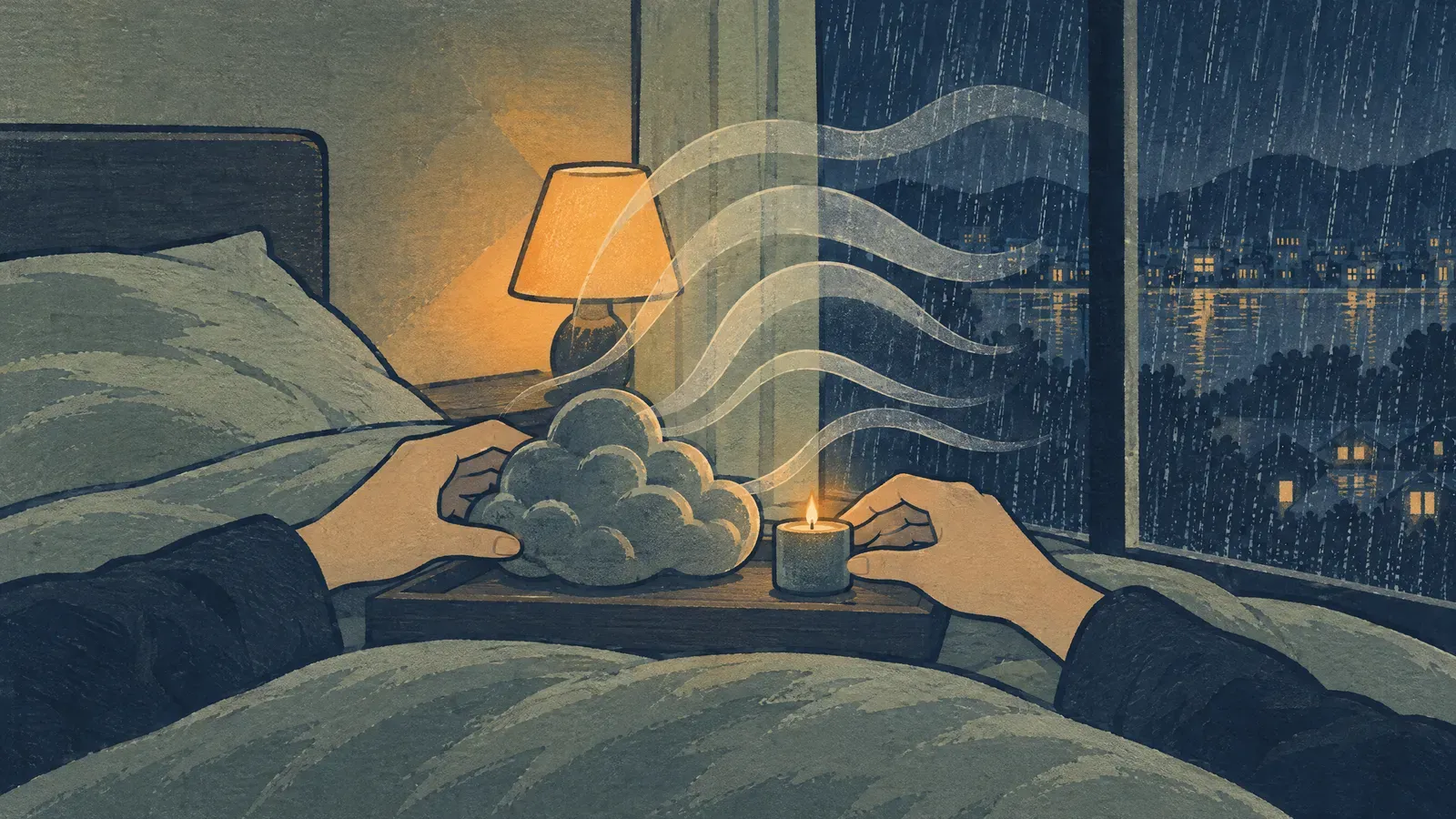
Start from the noise that’s waking you, then pick the one sound that covers it. If it’s a deep rumble, like a truck outside or a boiler that fires at two, brown noise is the sound to try. If it’s voices, a TV next door or a door closing down the hall, rain or white noise does more. That single sound is the whole soundscape most nights. Add a second, quieter one only if the room still feels bare, keep the volume low enough that you could talk over it, and set a timer that matches how long the noise actually lasts. You can build this in a browser at slonoise.com, free and with no account, and change it while it plays.
Brown noise is where most people start. Press play and read on.
Be honest about what actually wakes you before you pick anything. A few seconds of thought here saves a week of trying sounds that were never going to work.
| What you hear at night | What to try first |
|---|---|
| A road, a boiler, bass from the apartment below, a thud from upstairs | Brown noise |
| A television through the wall, a door, steps in the hallway, a faucet | Rain or white noise |
| Voices, a party, a neighbor on the phone | White or pink noise, and expect the words to blur without vanishing |
| Drilling and hammering from a building site next door | Brown noise underneath, rain over it, and earplugs as well |
| Nothing much, but the room is too quiet to settle in | Gentle rain, a fire, or a fan sound |
Covering a noise never removes it, which is why the World Health Organization’s noise guidance asks you to quiet the source first. Close the window, move the humming device, silence the notifications, and see what’s left to cover.
Voices are the hard case for every sound you might try, because the ear keeps searching any noise for speech. What a steady sound does is blur the words until they’re too much effort to follow, which is usually enough to stop you listening in. It won’t make them disappear.
The base is the sound that runs all the way through. It needs to be dull: no speech, no sudden event, nothing that leaves you waiting for the next thing to happen.
Reading about noise colors is slower than hearing them. Set a low volume, leave it there, and work down the list.
Brown noise is a deep rumble, the same kind of deep sound that traffic and boilers make. White noise is a bright hiss, up where voices and televisions sit. Pink noise lands between the two and is the one most people find easiest to leave on. Rain is mostly hiss with drips over it, so it does a similar job to white noise while being nicer to listen to. Brown noise is the most played sound on Slo, which tells you where most people’s noise problem sits.
If you came here wanting to make white noise, you don’t have to make anything. A noise generator produces it as it goes, so it sounds the same at three in the morning as it did at bedtime, and there’s no recording looping around. Whichever base you pick, listen to it alone for two minutes on whatever you’ll use overnight before you build on top of it.
Research won’t pick for you. The 2021 review that pooled this work came out split: some sleepers did better, some were disturbed, and the reviewers judged the evidence very weak. So the honest test is your own room over a few nights. Our brown, pink and white noise guide goes further into how the three textures differ.
Yes, and it takes about a minute. In the browser mixer you tap the sounds you want, each one gets its own volume, and you can save the result under a name so it’s there tomorrow night. Nothing to install, no account.
The reason to add a second sound is almost always that the first one misses part of the noise. Rain softens the television next door but does nothing about the truck idling at the lights, so brown noise goes underneath to cover that rumble while the rain handles the rest. Rain over brown noise is the pairing most people end up with, which is why it’s the mix to try before you build your own.
| Base | Second sound | What you’re listening for |
|---|---|---|
| Brown noise | Gentle rain | Rain softening the rumble, not sparkling on top of it |
| Pink noise | River | Water staying broad and even, with no splashes standing out |
| Rain | Brown noise | The rumble sitting underneath, where you notice it only when it stops |
| Ocean | Soft wind | Waves that roll steadily instead of building up and crashing |
To find out whether the second sound is earning its place, turn it off after a minute. If the mix works the same without it, leave it out. Keep it quieter than the base as well, so one sound clearly leads and the other fills in behind it. A third sound is rare at bedtime, and things like thunder or a close, crackling fire keep pulling your attention back to the speaker.
Set the volume low first, then bring it up only until the noise you’re covering stops standing out. Keep it below the level of a normal talking voice in the room. Louder isn’t better here. You’re trying to make the room less interesting, and past that point you’ve simply added a loud sound to a noisy night.
Where the sound comes from does more work than the volume does. A speaker across the room, pointed at the shared wall, covers more than the same sound pressed against your pillow. Set the level lying down, in the spot where you sleep, because the mix sounds different standing up next to the speaker.
A phone speaker can’t really play deep sound, so brown noise thins out on it and tempts you to turn it up. Flat earbuds you can lie on, or a small speaker away from the pillow, are worth more than another notch of volume. Whatever you use, make sure you’d still hear your alarm and the smoke detector.
Let the noise decide the timer. The mixer offers 15, 30 and 60 minutes, and leaving the timer off lets it play until you stop it.
Then leave it alone for three nights. Note only whether the room stayed comfortable, whether the outside noise stood out, and whether the stop disturbed you. Nights vary on their own, so one good night after a small change doesn’t prove much.
Sleep presets
Play one in the browser, then turn the sounds down or off until it fits your room.
Brown noise covers the traffic and the boiler, and rain softens the sharper sounds inside the room.

Gentle rain and a mild wind, with one owl a long way off over soft pink noise.

Pink noise runs steady while the waves rise and fall over it, for nights when the room feels too quiet.
Each of these is quicker to judge than a mix you built yourself, because the balance is already set and you’re only deciding whether you like it. Rain over brown noise suits a room with both a rumble and sharper noise coming through. The rainy cabin is softer and busier, for a room that’s quiet but feels stark. Ocean with pink noise underneath works if waves settle you, as long as you skip anything that crashes.
Most failed mixes are scenes when they should have been backgrounds. A storm with thunder in it and birds at the edges is lovely while you’re awake and reading, and at two in the morning every one of those events can land in your sleep. Take out anything you’d notice arriving.
Setting every sound to the same level causes the second problem. When nothing leads, the sounds compete and you hear the seams between them. Let one sound define the mix and keep the rest under it.
Watch out too for using more sound to solve more noise. If you have to run the mix loud to cover the disturbance, the sound has become a second noise problem. Earplugs, a rug, heavy curtains or a word with the neighbor will get you further than another few notches of volume.
The last one is a habit: rebuilding the mix every night. It puts decisions in the worst hour of the day. Change things in the afternoon, save the setup you like, and press play at bedtime.
A soundscape makes a noisy room less distracting. It doesn’t do anything about coffee at four in the afternoon, shift work that rotates every week, or a bedroom that’s already silent while you lie there awake.
It isn’t a treatment for insomnia either. People use a steady sound for a restless mind or for tinnitus, usually as quietly as they can while it still helps, and that’s the whole claim. Months of bad nights several times a week, or days that suffer for them, are worth an assessment from a doctor. Cognitive behavioral therapy for insomnia stands on much firmer evidence than any sound. Snoring with gasping or long pauses is worth raising too, and an audiologist should look at tinnitus that’s new, in one ear only, or getting louder.
Partly, and it’s the hardest case on this list. Drilling and hammering are loud and they start and stop, so a steady sound can only take the edge off the contrast. Put brown noise underneath for the thud of the work and rain over it for the sharper sounds, then add earplugs, because that combination does more than either on its own. Builders usually keep daytime hours, so a nap is where this matters most.
One is enough more often than people expect. Add a second only when the first one leaves the room feeling bare, or when it misses part of the noise, like rain that covers the TV next door but not the truck outside. Three sounds is usually one too many, because every extra layer is another chance for something to jump out at two in the morning.
It depends on what’s waking you. Brown noise is a deep rumble, so it takes care of low sounds: traffic, a boiler, bass from downstairs. White noise is a bright hiss and blurs voices and a TV better. Pink noise sits between the two and is the easiest one to leave on. Nobody has shown one of them beats the others for sleep, so play all three and keep the one you stop noticing.
You don’t have to make it. A noise generator produces it on the spot, so it sounds the same at three in the morning as it did at bedtime and there’s no recording to loop. A fan pointed away from the bed gets close to the same effect if you’d rather not run a phone all night.
Match it to the noise. If the street settles by midnight, 30 or 60 minutes is enough. If a road or a neighbor’s shift runs until morning, leave the timer off and let it play quietly, because waking into sudden silence at one in the morning is its own disturbance.
A duller one. Drop anything with events in it, like thunder, birds or a crackling fire, and stay with a steady base you can predict. Set the volume before you lie down rather than adjusting it in the dark, and give one setup several nights before you change anything.
You can, and a small speaker across the room is kinder. Headphones press sound into your ears for hours and the cable is a nuisance to sleep with. If you do use them, pick flat earbuds you can lie on and keep the volume low enough that you’d hear an alarm.
Explore more sounds in Slo
Stack two or three sounds, keep the blend, and let the timer stop it. Slo, on iOS, Android and Mac.