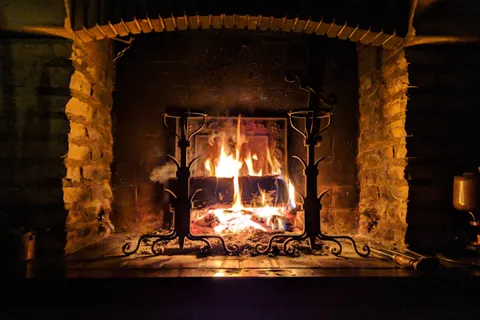
Free Online Player
Fireplace
A fireplace up close is crackles, soft pops, and the deeper rush of wood burning. People use it to make reading, resting, studying, or an evening routine feel warm and sheltered. This free player supplies the atmosphere without smoke, heat, tending, or cleanup.
Ready to play
Put this under rain or a fire, keep the blend you end up with, and play it through the night with your screen off. The Slo app does that on iOS, Android and Mac.


What creates a fireplace crackle
A wood fire produces sound as heat drives moisture and gases from the fuel, fibers split, small pockets rupture, and shifting pieces settle. The sharp pops are bright and quick, and the burning itself keeps something softer and steady going underneath them. A recording keeps that uneven pattern, so a fireplace is not a noise color and it will not cover other sounds evenly. Its appeal is partly acoustic and partly associative: firelight has long accompanied shelter, conversation, food, and rest, and many listeners connect the crackle with warmth even when no visual flame is present. The small events can occupy just enough attention to soften an empty room without introducing language or melody. Quiet fireplace audio may help someone unwind, read, or establish a bedtime atmosphere, but it does not heat a space, treat stress, or reliably make every listener sleepy. People sensitive to sudden clicks may prefer rain, river sound, or smoother pink noise instead.
Recorded fire offers ambience without the hazards of a real hearth, but it should not blur practical safety distinctions. Never use audio to cover an active smoke alarm, carbon-monoxide alarm, or unusual sound from a heating appliance. If a real fireplace is burning, follow ventilation, screen, maintenance, and supervision guidance rather than treating the recording as part of its operation.
Cozy sound for reading and evening routines
The crackle works especially well with fiction, journaling, knitting, or other quiet activities where a little movement feels welcome. Each pop refreshes the scene, but there is no song structure to follow. In a shared home or office, low fireplace sound can create perceived privacy without the clinical character some people hear in synthetic noise.
At bedtime, the warmth association may make a room feel settled even though the audio itself changes often. Use a timer if sharp pops might disturb you after you fall asleep. For focused work, choose a lower setting than you would for atmosphere; you want the steady burning to stay while the separate crackles stop asking for your attention.
Create warmth without sonic clutter
Place the sound at a natural distance, ideally through a room speaker rather than directly beside the ear. Raise it only until the texture feels present. On a speaker with plenty of bass, turn it down if the deep burning sound gets tiring. On a phone speaker, do not crank it up chasing bass that is not there, because that only makes the pops harsh. Fifteen or thirty minutes can mark a deliberate transition out of work.
In the free browser mixer, pair fireplace crackle with soft rain for a sheltered-cabin scene, or add a restrained river layer for an outdoor camp mood. Let one element lead and keep the other far behind it. The guide to creating a sleep soundscape can help you preserve a stable overall level when combining detailed recordings.
Frequently asked questions
Why are fireplace sounds relaxing?
They combine gentle continuous texture with irregular small crackles, and many people associate a hearth with warmth and safety. The response is learned and personal rather than guaranteed.
Can crackling fire sounds help with studying?
They can suit reading or low-pressure work when silence feels stark. If the pops interrupt language-heavy tasks, turn the track down or choose smoother pink noise.
Does this fireplace player show flames?
No. It is an audio-first player designed for continuous background listening, with volume and timer controls but no simulated video fire.
What pairs well with fireplace audio?
Rain creates an indoor, sheltered mood, while river sound suggests a campsite. Brown noise can fill the low background if the crackles feel too isolated.