Free Online Player
Dungeon Air
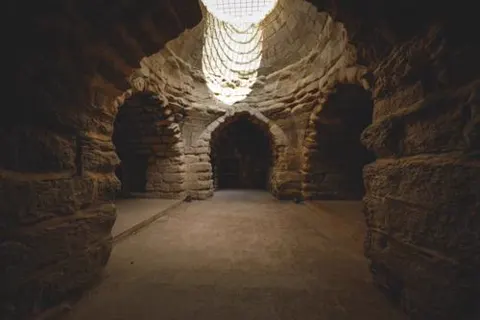
Dungeon Air is a hollow subterranean drone: low air movement, cavernous resonance, and the suggestion of unseen passages. It is designed more for atmosphere, fiction, games, and imaginative focus than for cheerful nature relaxation. Keep the rumble restrained, and set a timer to match the scene, the chapter, or the block of work it is sitting under.
Ready to play
Put this under rain or a fire, keep the blend you end up with, and play it through the night with your screen off. The Slo app does that on iOS, Android and Mac.


How empty stone acquires a voice
Slow air moving through tunnels and openings makes a broad, deep rumble, and hard stone throws back long echoes, so you cannot tell where anything is or how far off. A big stone space rings at certain pitches, which is why even faint moving air can sound deep and built. The recording avoids a clear melody or creature; its tension comes from ambiguity, hollow scale, and a drone that appears to continue around corners. So this is an imagined place, not a noise color and not a recording of somewhere real outdoors.
Mellow wind feels open and gentle; dungeon air is enclosed, dark, and bass-led. Desert wind exposes a vast horizon, whereas this ambience suggests walls and underground depth. Its mood is intentionally uncanny, so it will not suit every sleep routine.
Subterranean atmosphere for stories and games
Use the low drone behind fantasy reading, tabletop sessions, level design, or writing that benefits from a strong sense of place. Because it contains few distinct events, it can also support routine work, though the ominous tone may influence mood. Keep it quieter than anyone talking, and do not push the bass up until it covers speech or the sounds of the room around you.
Some listeners enjoy dark ambience at bedtime, but others find suspense activating. Try it with a short timer first; a deep sound is not automatically a soothing one. Dungeon Air is entertainment and atmosphere; it does not relieve anxiety, improve sleep, or substitute for care when either is persistently difficult.
Carve depth without overwhelming the room
Play through speakers when possible so reflections blend with the physical room. Start low, especially on bass-capable equipment, and keep alarms and other cues audible. Headphones can exaggerate pressure and enclosure; use a modest level and take breaks. A timer can neatly end a game scene or focused writing sprint.
In the sound mixer, a small amount of mellow wind can widen the passages, while distant crow calls create a ruined-fortress edge. Compare its enclosed low air with the open sweep of desert wind. The mixing guide explains how to leave room for speech and keep the deep rumble from turning to mud.
Frequently asked questions
What does Dungeon Air sound like?
It is a low, hollow airflow with cavern-like resonance, suggesting stone corridors and underground rooms rather than a literal wind outdoors.
Is dungeon ambience good for gaming?
Yes. Its sparse, nonmusical drone can establish place beneath tabletop dialogue, fantasy reading, or exploration gameplay.
Can I use Dungeon Air for sleep?
You can try it quietly, but its ominous mood may keep some people alert. A gentler wind or brown noise is more neutral.
How should I play low dungeon sounds?
Begin at restrained volume, particularly with headphones or subwoofers. The ambience should imply depth without hiding alarms, speech, or real surroundings.